

Engine & Performance
Spark plugs are the cheapest part that can make an engine feel new again, and the one most often replaced with the wrong thing. Worn plugs produce exactly the symptoms people spend money chasing elsewhere — rough idle, hesitation under load, a misfire code, and fuel economy quietly dropping over months rather than all at once.

There is no universal spark plug, and this matters more here than almost anywhere on this site. Heat range, thread reach, seat type and gap are all specified by the engine designer, and fitting a plug with the wrong heat range can cause pre-ignition and genuine engine damage. Everything below is a product line we rate, linked to one real listing so you can see it — you must confirm the exact part number for your engine before buying. Your owner's manual or the manufacturer's application lookup is the authority, not a general recommendation.
We started from original equipment supply, because spark plugs are one of the few parts where the OE brand is usually the correct brand — engines are developed around a specific plug, and matching it removes an entire class of problem. From there we looked at electrode material against realistic service intervals, and at whether the line has broad application coverage, since a plug that does not exist for your engine is not a recommendation. Per-listing review counts are structurally low across this whole category because each listing covers one part number, so we judged the lines rather than individual ASINs. Plugs are usually changed alongside other maintenance: see our guides to the best fuel injector cleaners and the best OBD2 scanners for diagnosing what a misfire code is telling you.

If you do not know which brand your engine shipped with, NGK is the safest single answer. They supply original equipment across an enormous range of manufacturers, their application data is reliable, and the G-Power platinum line sits at a sensible point between the throwaway copper plugs and the premium long-life iridiums. Platinum resists electrode erosion well enough to hold a stable gap across a normal service interval, which is where copper plugs fall down. Note this listing showed no rating at all in Amazon search and 4.6 from nearly five thousand on its own page — worth knowing if you are comparing plugs yourself.

Iridium's advantage is that the centre electrode can be made very fine while still resisting erosion, and a finer electrode needs less voltage to jump the gap. That means a more reliable spark as the plug ages, which is why manufacturers specify iridium for long service intervals. DENSO is the OE supplier to a large share of Japanese engines, so on many cars this is simply the plug the engine was designed around. One firm warning that applies to this pick more than the others: do not attempt to re-gap a fine-wire iridium plug with a conventional gapping tool. The electrode is delicate and you will damage it.

On a GM engine, this is usually the plug that came out of it, and matching original equipment removes a whole set of variables around heat range and gap. That is worth more than any marginal performance claim between brands. ACDelco's Professional Iridium line is well regarded and rated 4.7 here. The honest limitation is coverage — ACDelco's catalogue is deepest on GM applications and thinner elsewhere, so on a Honda or a Volkswagen you are better served by NGK or DENSO. Check what your engine shipped with; if the answer is ACDelco, buy ACDelco.

If you drive a Ford, this is very likely the plug the factory fitted, and the argument for OE applies more strongly to spark plugs than to almost any other part — the engine was developed around a specific plug's heat range and reach. Nearly three thousand ratings at 4.7 is remarkable for a fitment-locked listing, and it is the largest sample anywhere in this roundup. The pack of eight matters practically too, because plugs must always be replaced as a complete set and buying singles is how people end up one short. There is no reason to consider this on a non-Ford engine, and that narrowness is the point rather than a shortcoming.
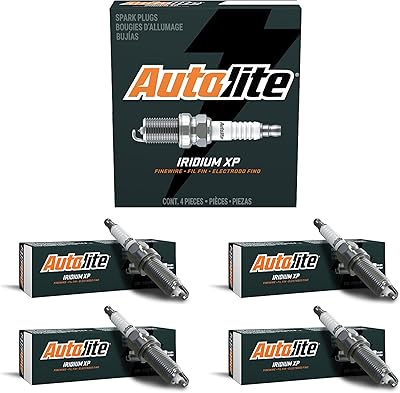
Autolite is the brand people forget is an OE supplier, and the Iridium XP line is the value pick among genuine iridium plugs rather than a budget imitation of one. The construction is the interesting part: an iridium fine-wire centre paired with a platinum-backed ground electrode, which addresses the fact that ground electrode erosion is what actually ends the life of many plugs. Coverage is broad across both domestic and import engines, so unlike Motorcraft or ACDelco this is worth checking whatever you drive. At 4.6 across nearly two and a half thousand ratings, it is well proven. If your engine specifies iridium and you are not tied to a particular OE brand, start here.

On a European car, Bosch is frequently the plug that came out of it, and the OE argument applies exactly as it does to Motorcraft on a Ford. Double iridium is the genuine technical point here: most iridium plugs use the precious metal only on the centre electrode, and pairing it with an iridium ground electrode addresses the erosion that ends plug life from the other side. The review count is the honest caveat — 159 ratings is a fraction of what Motorcraft or Autolite show, because this listing covers one fitment among hundreds Bosch publishes. We are weighing Bosch's OE track record alongside that number rather than pretending the sample is deeper than it is.
| Pick | Electrode | Typical life | Best for | Owner rating | Link |
|---|---|---|---|---|---|
| NGK Best Overall |
Platinum | Long | Broadest coverage, unsure of OE | 4.6★ (4,900+) | Check Price |
| DENSO Best Long Life |
Fine-wire iridium | Longest | Extended service intervals | 4.7★ (700+) | Check Price |
| ACDelco Best OE Match |
Iridium | Longest | GM engines, OE match | 4.7★ (900+) | Check Price |
| Motorcraft Best for Fords |
Copper core, OE spec | Per Ford interval | Ford and Lincoln engines | 4.7★ (2,900+) | Check Price |
| Autolite Best Broad-Coverage Iridium |
Iridium centre, platinum ground | Longest | Value iridium, any make | 4.6★ (2,470+) | Check Price |
| Bosch Best European Fitment |
Double iridium | Longest | VW, Audi, BMW, Mercedes | 4.7★ (159) | Check Price |
A plug's heat range describes how quickly it sheds heat from the tip into the cylinder head. Too cold and it fouls with deposits; too hot and the tip can become an ignition source, causing pre-ignition that damages pistons. This is specified by the engine designer and is not something to adjust because a hotter plug sounds better. Use the part number your manual or the manufacturer's lookup gives you.
No plug adds meaningful power to a healthy engine — anything claiming horsepower gains from a spark plug is selling something. What differs is how long the electrode holds its shape. Copper conducts best and erodes fastest, so it suits older engines with short intervals. Platinum lasts several times longer. Iridium lasts longest and is what modern long-interval engines specify. Fit what your engine calls for.
Older copper plugs were routinely gapped with a feeler gauge and a bending tool. Fine-wire iridium and platinum plugs have delicate precious-metal tips that chip or bend permanently under a gapping tool, and most ship pre-gapped for their application. Check the gap gently against specification if you like, but do not lever the electrode. If the gap is wrong out of the box, it is the wrong part number.
Over-tightening a plug can damage the threads in an aluminium head, which is an expensive repair; under-tightening lets combustion gases escape past the seat and can cause the plug to overheat. Use a torque wrench and the figure from the manual. Always replace all plugs at once — a single new plug alongside worn ones just moves the misfire. Work on a cold engine, because pulling plugs from a hot aluminium head risks stripping threads.
This is one of the most common reasons people go looking for new plugs, and it deserves a straight answer rather than a sales pitch. Worn plugs genuinely do cost you fuel. New plugs do not give you more miles per gallon than the engine was designed to deliver — they give you back what wear quietly took away. Those are two very different claims, and only one of them is true.
A plug that is eroded, fouled or gapped too wide needs more voltage to fire, and eventually there are cycles where it does not fire at all. Every failed combustion event is a cylinder's worth of fuel pushed into the exhaust unburned. On a modern engine the oxygen sensors read the extra oxygen and the ECU responds by adding more fuel, so the loss compounds. The decline is gradual — a fraction of a mile per gallon over months rather than a sudden drop — which is exactly why most people never notice it happening and then find the car feels transformed after a plug change. If a cylinder is missing badly enough to set a P0300-series code, the fuel penalty is severe and worth fixing immediately, not least because raw fuel in the exhaust destroys catalytic converters.
If your plugs are within their service interval and firing cleanly, combustion is already complete. There is no unburned fuel left over for a better plug to recover. Any product promising a fuel economy gain on a healthy engine is promising something the combustion process cannot deliver, and the aftermarket has been selling that promise under a long line of names for decades. The honest ceiling on a plug change is restoring the economy the engine had when its plugs were new — which, if they are badly worn, can still be worth real money.
Buy the plug your engine specifies, in the material it specifies, and change all of them at once. If your engine calls for iridium at a long interval, DENSO Iridium Long Life holds its gap across that interval rather than sagging halfway through it, so the economy stays where it should for longer. If you do not know what your engine shipped with, NGK G-Power is the safe answer. What you should not do is downgrade a modern iridium application to copper to save money — the electrode erodes, the gap widens, and you are back to losing fuel within a year or two, having also bought yourself the labour of doing the job again.
Fuel economy has several cheaper suspects and plugs are rarely the biggest one. Underinflated tires cost real mileage on every single trip and cost nothing to fix — see our guide to checking tire pressure properly and the best tire pressure gauges. A clogged engine air filter restricts airflow into the engine. A failing oxygen sensor makes the ECU run rich continuously and is one of the largest single-fault economy losses on a modern car — an OBD2 scanner will show you its live readings rather than leaving you guessing. Work through those first, then change the plugs on schedule.
"Which brand" is the wrong first question, but it is the question everyone asks, so here is the honest version of the answer. The best spark plug brand for your car is usually whichever one supplied the plugs it was built with. Engines are developed around a specific plug — its heat range, its reach, its electrode geometry — and the original equipment brand is the one that was in the engine while it was being calibrated. Every brand below makes plugs that work correctly in the right application and cause problems in the wrong one.
| Brand | Original equipment strength | Known for | Buy it when |
|---|---|---|---|
| NGK | Japanese, plus a wide range of European and American engines | The broadest catalogue in the aftermarket and reliable application data | You do not know what came out of the engine |
| DENSO | Toyota, Honda, Mazda, Subaru and much of the Japanese market | Fine-wire iridium built for long service intervals | Japanese engines, and long-interval iridium applications |
| Bosch | German manufacturers — Volkswagen, Audi, BMW, Mercedes | Double platinum and long-life designs | European engines, especially where Bosch was the OE fit |
| ACDelco | General Motors — it is GM's own parts brand | Iridium plugs matched to GM applications | GM engines above all; coverage thins out elsewhere |
| Motorcraft | Ford — Ford's own parts brand | The exact OE match on many Ford engines | Ford engines specifically |
| Champion | Older American applications and small engines | Long-established copper and platinum lines | Older engines and equipment where it was the OE fit |
| Autolite | American applications with a Ford OE history | Straightforward copper and platinum plugs | Older domestic engines on shorter service intervals |
There are three reliable routes. The owner's manual usually names the specification and sometimes the brand outright. Pulling one plug and reading the part number stamped on the insulator tells you exactly what is fitted now, though that only helps if whoever did it last fitted the right thing. Best of all, use the manufacturer's own application lookup — NGK, DENSO and Bosch each publish one, and they are the authority on their own catalogue. If you are pulling a plug to check, our guide to changing spark plugs covers doing it without stripping the threads.
Between NGK, DENSO and Bosch, in the correct part number and heat range for your engine, the practical difference on a road car is small enough that you should buy whichever is available from a seller you trust. What matters far more is the part number, the material your engine specifies, and fitting them correctly. A correctly specified budget plug beats a premium plug in the wrong heat range every time, and it is not close.
Searches for performance plugs mostly end at products promising horsepower, so it is worth being blunt: a spark plug cannot add power to a healthy, correctly specified engine. Its job is to ignite the mixture reliably, and once ignition is reliable there is no such thing as more ignition. What follows is what actually matters when the engine is either not stock or not healthy.
If your plugs are in specification and firing, a different plug changes nothing you could measure on a dyno. The gain people report after a plug change is real, but it is the recovery of power lost to worn plugs, not a gain over standard. The test is simple: if the old plugs came out worn, you will feel a difference; if they came out nearly new, you will not.
Forced induction and aggressive tuning are the real cases. More boost or more ignition timing puts more heat into the combustion chamber, and a plug shedding heat at the stock rate can get hot enough to ignite the mixture on its own — pre-ignition, which destroys pistons quickly. Going one heat range colder than stock is standard practice on a tuned or boosted engine, and your tuner or the platform's community will name the specific part number. Do not do this to a stock engine: a colder plug in an engine that does not need one fouls at low load and you will have created a problem rather than solved one.
A larger gap needs more voltage to jump, and higher cylinder pressure raises the voltage required further still. Under boost, a stock gap can exceed what the coil is able to deliver and the spark is effectively blown out under load — a misfire arriving at precisely the moment you are asking for power. Tuned engines commonly run a slightly reduced gap for this reason. This is one of the few situations where gapping is legitimately part of the job, and it is a large part of why boosted builds often run copper or robust fine-wire plugs that tolerate being adjusted.
Multiple ground straps, exotic electrode shapes, split-fire geometries and "performance" coatings have been sold as power adders for forty years, and independent testing has never supported the claims on a healthy engine. Treat any spark plug advertising horsepower gains as marketing rather than engineering. Put the money into the correct part number instead, and if you want power from the ignition system on a modified engine, spend it on coils that can actually deliver the energy.
Electrode material is a service-life decision rather than a power decision, and your engine has largely made it for you already. It matters because a plug's gap grows as the electrode erodes, and a wider gap needs more voltage until eventually the coil cannot deliver it. Harder materials erode more slowly and hold their gap longer — that is the whole story.
| Material | Typical service life | What it does well | Fit it when |
|---|---|---|---|
| Copper (nickel-alloy tip) | Shortest — roughly 20,000 to 30,000 miles | Conducts heat and current best, and tolerates being gapped | Your engine specifies it, or it is an older or boosted engine on short intervals |
| Single platinum | Roughly 60,000 miles | Resists erosion far better than copper at modest cost | Mid-interval applications where platinum is specified |
| Double platinum | Roughly 60,000 to 100,000 miles | Platinum on both electrodes, so both survive wasted-spark ignition | Wasted-spark systems, where both electrodes take wear |
| Iridium | 100,000 miles or more | Hardest material in common use; the fine electrode needs less voltage | Modern long-interval engines that specify it |
| Ruthenium | Comparable to iridium | A newer alloy aimed at durability under sustained high heat | It is what your application calls for — no reason to seek it out otherwise |
Fit what your engine specifies. Upgrading beyond the specified material is usually harmless but rarely worth paying for; downgrading from iridium to copper to save money guarantees you will be doing the job again far sooner. On a modern engine with coil-on-plug ignition and awkward access, the labour is the expensive part of a plug change, not the plugs — which makes the cheap plug the expensive choice. Downgrading also runs the ignition system outside the conditions it was calibrated for.
If you do not know what your engine shipped with, NGK G-Power is the safest answer — broad coverage, OE quality and a sensible price. If your engine specifies iridium and a long interval, DENSO Iridium Long Life is the OE choice on most Japanese engines. On a GM engine, ACDelco Professional Iridium is very likely what came out. Whichever you choose, confirm the exact part number for your engine, torque them to specification on a cold engine, and replace them as a set.
Plugs are a straightforward job on most engines and an awkward one on a few. Our guide to changing spark plugs covers the cold-engine rule and torque specification, and reading a spark plug tells you what the old ones are reporting.
Prices change constantly, so we do not list them. These links go straight to each product on Amazon.
NGK → DENSO → ACDelco → Motorcraft → Autolite → Bosch →It depends entirely on the plug material and what your manufacturer specifies. Copper plugs may need replacing every 20,000 to 30,000 miles; platinum typically 60,000; iridium often 100,000 or more. Your owner's manual is the authority. Symptoms of worn plugs — rough idle, hesitation, misfire codes and gradually worsening fuel economy — often appear before the interval is up.
Not on a healthy engine. No spark plug adds meaningful power; what iridium buys you is service life, because the fine electrode resists erosion and holds its gap far longer. You may feel a real improvement replacing badly worn plugs with new ones, but that is restoring lost performance rather than gaining any. Treat horsepower claims on spark plug packaging with scepticism.
No. Heat range, thread diameter and reach, seat type and gap are all specified for your engine, and fitting the wrong heat range can cause fouling or pre-ignition serious enough to damage pistons. There is no universal spark plug. Use your owner's manual or the manufacturer's application lookup to get the exact part number.
Most modern plugs ship pre-gapped for their listed application and need no adjustment. Fine-wire iridium and platinum plugs should not be re-gapped with a conventional tool — the precious-metal tip chips or bends and the plug is ruined. You can check the gap gently against specification, but if it is wrong out of the box, you almost certainly have the wrong part number rather than a plug that needs adjusting.
Rough or unstable idle, hesitation or stumbling under acceleration, harder starting, a misfire code such as P0300 through P0308, and fuel economy that has drifted down over time. Because the decline is gradual, most people do not notice how much performance they have lost until the plugs are replaced. A misfire code identifies the affected cylinder, which is a good place to start.
Only by restoring economy that worn plugs took away. A misfiring or badly eroded plug wastes fuel on every cycle it fails to burn cleanly, so replacing it can recover a genuine amount of mileage. On an engine whose plugs are still within their interval and firing properly, combustion is already complete and there is nothing left for a new plug to recover. Treat any plug advertising a fuel economy gain on a healthy engine as marketing.
Usually whichever brand supplied your engine's plugs from the factory, because the engine was calibrated around that plug. NGK is the safest general answer when you do not know, thanks to the broadest application coverage. DENSO is the OE fit across most Japanese engines, Bosch across much of the German market, ACDelco on GM and Motorcraft on Ford. Between the major brands in the correct part number, the practical difference on a road car is small — the part number matters far more than the badge.
It depends on whether the extra cost buys something your engine actually needs. Paying for iridium in an engine that specifies iridium is worth it, because the long service interval depends on that material. Paying extra for a plug advertising horsepower, exotic electrode geometry or fuel savings is not — those claims do not survive independent testing. The most expensive plug in the wrong heat range is worse than the cheapest plug in the right one.
Not automatically. Coils fail on their own schedule and replacing healthy ones wastes money. The exception is a high-mileage coil-on-plug engine where access is genuinely difficult — if a coil is already exposed and the engine has covered a lot of miles firing through worn plugs, replacing it while you are in there can be sensible. If a misfire persists on the same cylinder after new plugs, swap that coil with a neighbouring cylinder's and see whether the misfire follows it. That identifies a failing coil without guessing.


Every product on this page was located and verified on Amazon at the time of writing — we confirm the exact listing, the star rating, the review count and stock status before a product goes in a roundup, and we never recommend a product we could not verify. Specifications come from the manufacturer listing, not from memory. We deliberately publish no prices, because they change faster than we can update pages. Ratings and review counts were accurate as of August 24, 2026.