

Engine & Performance
Full synthetic oil is one of the few upgrades in this hobby where the marketing and the engineering actually agree. Synthetic base stocks are built to a consistent molecular size rather than refined out of crude, which means they flow better when cold, hold up better when hot, and resist breaking down for far longer. On a modern turbocharged or direct-injection engine, synthetic is not an upgrade at all — it is what the manufacturer specified, and using conventional oil will void warranty coverage on plenty of vehicles.

The genuinely useful question is not synthetic versus conventional, which is settled. It is which synthetic, in what grade, and how that maps to what your engine actually needs. All three picks below are 5W-30, the most common modern grade — check your cap or manual, because if your engine calls for 0W-20 none of these are the right bottle.
Motor oil is one of the few categories where the specification sheet tells you almost everything, so we started there: current API service category, ILSAC rating, and whichever OEM approvals matter for common vehicles. From there we looked at the additive package, because that is where meaningful differences live — anti-wear chemistry, detergents that keep deposits from forming, and in high-mileage formulations, seal conditioners that swell hardened gaskets. We stuck to 5W-30 across all three so the comparison is like for like. Every pick has thousands of owner ratings, which for oil mostly confirms packaging and authenticity rather than performance — but counterfeit oil is a real problem, so that matters. Pair this with our fuel injector cleaner guide for the rest of an engine service, and our OBD2 scanner guide if a light came on before the oil change was due. Brake pads are the other job worth doing on the same day the car is on stands.

EDGE is the oil we would default to for a modern engine that is not yet high-mileage. The titanium additive story is more than branding — the point of it is maintaining oil film strength at the moments of highest pressure, which is exactly what a turbocharged or direct-injection engine subjects oil to. It carries current API SP and ILSAC GF-6 ratings, which means it includes the low-speed pre-ignition protection that modern turbo engines specifically need and older oil formulations did not have. The 5-quart jug is the right size for most cars and the 4.8-star average across 13,000 ratings is about as good as this category gets.

Valvoline Advanced does everything EDGE does for less money, and we would not talk anyone out of buying it instead. It carries the same current API SP and ILSAC GF-6 approvals, which is the part that actually determines whether an oil is right for your engine, and the detergent package is genuinely good at keeping things clean. The cold-start emphasis is worth noting because it is where the real wear happens — most engine wear occurs in the first seconds after a cold start, before oil pressure comes up. If price per quart is a factor and your engine takes 5W-30, this is the sensible buy.
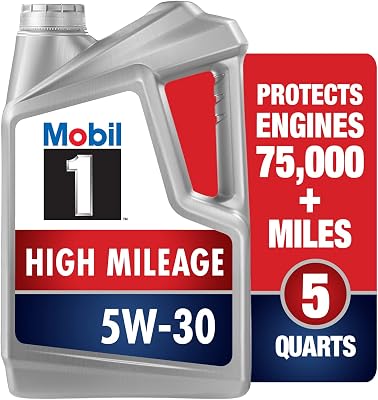
High-mileage oil is one of the rare cases where the marketing category corresponds to real chemistry. The difference is seal conditioners — additives that cause aged, hardened rubber seals to swell slightly and regain flexibility. On an engine that has started weeping oil past a valve cover gasket or main seal, that can genuinely slow or stop a minor leak, and it is a far better first move than a stop-leak product. Mobil 1's version also runs a heavier anti-wear package. At 4.9 stars across 10,000 ratings it is the best-rated oil here. If your car is under 75,000 miles, there is no benefit to it and you should buy one of the other two.
| Pick | Grade | Specification | Best for | Owner rating | Link |
|---|---|---|---|---|---|
| Castrol Best Overall |
5W-30 full synthetic | API SP / ILSAC GF-6 | Modern engines, turbo and GDI | 4.8★ (13,000+) | Check Price |
| Valvoline Best Value |
5W-30 full synthetic | API SP / ILSAC GF-6 | Best cost per quart | 4.8★ (13,500+) | Check Price |
| Mobil 1 Best High-Mileage |
5W-30 full synthetic HM | API SP / ILSAC GF-6 | Engines over 75,000 miles | 4.9★ (10,000+) | Check Price |
The 5W-30 on the bottle means two things: how the oil flows at cold-start temperature (the 5W) and its viscosity at operating temperature (the 30). Your engine was designed around specific oil clearances and a specific oil pump, and the manufacturer's grade is an engineering requirement, not a suggestion. It is printed on the oil filler cap on most cars and in the manual on all of them. Running 5W-30 in an engine that specifies 0W-20 will reduce fuel economy and can affect variable valve timing systems that rely on precise oil flow. Check first.
API SP and ILSAC GF-6 are the current service categories, and the important thing they added over previous specifications is protection against low-speed pre-ignition — a destructive phenomenon specific to small turbocharged direct-injection engines. If you drive anything modern and turbocharged, an oil carrying those ratings is not optional. Older oils rated API SN will still be sold; they are fine for older engines and wrong for new ones.
The seal conditioners in a high-mileage oil genuinely swell aged rubber and can slow a small seep. What they will not do is fix a failed gasket, a leaking rear main seal that is dripping onto the driveway, or an engine burning oil through worn rings. Treat high-mileage oil as maintenance for an aging engine, not as a repair. And there is no benefit to running it in a newer engine — the seals are already flexible, and you are paying for chemistry you do not need.
Synthetic oil is capable of long intervals, and manufacturers now commonly specify 7,500 to 10,000 miles. But those figures assume normal service. Short trips where the engine never fully warms up, extensive idling, towing, or a lot of very cold starts all constitute severe service, and every manufacturer publishes a shorter interval for it. Short-trip driving is particularly hard on oil because moisture and fuel dilution never boil off. If most of your driving is under 15 minutes, halve the interval regardless of what the bottle claims.
For a modern engine under 75,000 miles, Castrol EDGE 5W-30 is the pick — current specifications, strong film strength under load, and the right choice for turbo and direct-injection motors. Valvoline Advanced meets the same specifications for less and is the value answer with nothing meaningful given up. Past 75,000 miles, Mobil 1 High Mileage earns its place through seal conditioners that address a real problem in older engines. The one thing that matters more than any of this: confirm your engine actually takes 5W-30 before you buy five quarts of it.
Prices change constantly, so we do not list them. These links go straight to each product on Amazon.
Castrol → Valvoline → Mobil 1 →For any engine built in roughly the last fifteen years, yes — and on many of them it is required rather than optional. Synthetic base stocks flow better at cold start, resist thermal breakdown, and support the long drain intervals modern cars are designed around. Turbocharged engines in particular subject oil to temperatures that will coke conventional oil in the turbo bearing. The cost difference per change is modest and the interval is usually longer, which narrows the gap further.
Follow your manufacturer's interval, which for most modern vehicles running synthetic is between 7,500 and 10,000 miles. If your driving is mostly short trips, stop-and-go, towing, or in extreme temperatures, use the severe-service interval in your manual instead — typically about half. Cars with an oil life monitoring system are generally trustworthy, since they account for actual operating conditions rather than mileage alone.
Yes, at any point, on any engine. The idea that switching causes leaks is a myth left over from early synthetic formulations decades ago. Modern synthetics are fully compatible with conventional oil and with the seals in any engine designed for either. You do not need to flush the engine or do anything special — drain, replace the filter, and fill with synthetic.
The first number with the W is the oil's cold-flow rating — lower means it stays thinner and pumps faster at low temperature, which protects the engine during cold starts. The second number is viscosity at full operating temperature, around 100°C. So 5W-30 flows like a 5-weight when cold and behaves like a 30-weight when hot. Multi-grade oils achieve this with viscosity index improvers, and one of the advantages of synthetic base stocks is that they need fewer of them.
Not automatically. If your engine is not consuming or leaking oil, standard full synthetic is completely adequate and you can keep running it indefinitely. High-mileage formulations become worthwhile when you start seeing minor seepage from valve cover or timing cover gaskets, or slow oil consumption between changes. Then the seal conditioners have something to act on. Before that, they have nothing to do.


Every product on this page was located and verified on Amazon at the time of writing — we confirm the exact listing, the star rating, the review count and stock status before a product goes in a roundup, and we never recommend a product we could not verify. Specifications come from the manufacturer listing, not from memory. We deliberately publish no prices, because they change faster than we can update pages. Ratings and review counts were accurate as of August 4, 2026.