

Brakes & Suspension
Most people replace rotors for the wrong reason. A pulsing brake pedal gets diagnosed as warped rotors and a new pair goes on, and six months later it comes back — because the rotors were never warped. What is usually happening is uneven pad material deposited across the friction surface, which produces exactly the same pulse and is caused by how the brakes were bedded and used, not by the metal bending.

That matters before you buy anything, because it changes what you should buy and whether you need to. This guide covers rotors as a part in their own right: metallurgy, coatings, whether drilled and slotted designs are worth it, and how to measure yours against the minimum thickness stamped on the hat. For the friction side of the same job, our brake pads guide covers compounds — the two parts are replaced together and chosen separately.
Rotors are fitment-specific and there is no universal part, so we selected product lines we rate rather than single ASINs that will fit your car — each link goes to one real listing so you can see the product, and you must confirm the part number against your year, make, model and trim. Beyond fitment we looked at coating, since bare cast iron surface-rusts within days and a zinc or geomet coating keeps the hat and vanes clean for years, and at whether drilled or slotted designs are appropriate for road use. We treated review depth carefully here: per-listing counts are low across the whole category because every listing covers one fitment. A rotor change is a wheels-off job, so pair this with our guides to the best torque wrenches and the best jack stands.

If you tow, haul, or drive somewhere with long descents, heat is the thing that actually degrades braking, and this is the kit built around that. The slots sweep gas and debris off the pad face and the drillings help shed heat; on a truck working hard, both do something measurable. The zinc coating is the quiet win — bare rotor hats rust within days of fitting and look terrible through an alloy wheel forever after. Buying pads and rotors as a matched kit also removes the bedding mismatch that causes half the pedal pulses people later blame on warping. For a light commuter car this is more rotor than you need.
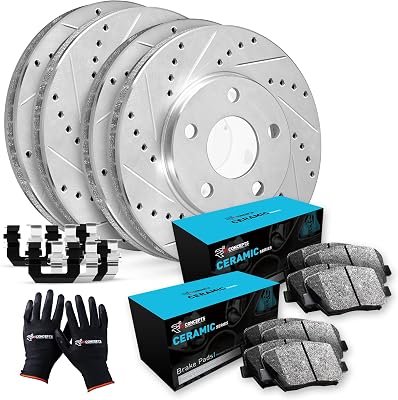
Four thousand-plus ratings on a single fitment is remarkable in this category, where most listings sit in the low hundreds because each one covers one vehicle. That depth is the reason this is here: you are reading feedback from a lot of people who fitted this exact kit to this exact car. Doing both axles at once also makes sense more often than people assume — rears wear slower but they do wear, and replacing all four keeps the braking balance the car was designed around. Check the fitment carefully, because a front-and-rear kit is more specific than a single-axle one.

This is the rotor most people should actually buy, which is why it is worth saying plainly: for a normal car driven normally, a good plain rotor outperforms a drilled and slotted one. Drillings are stress risers that can crack under hard road use, and slots accelerate pad wear — both earn their place on track cars and tow rigs and neither helps a commuter. Bosch builds these to the standard they supply as OE, with a coating that keeps them looking right. The 220 reviews are not a weak signal but a reflection of one fitment among hundreds Bosch lists. Note it is sold singly.
| Pick | Design | Includes pads | Best for | Owner rating | Link |
|---|---|---|---|---|---|
| PowerStop Best Overall |
Drilled and slotted, zinc | Yes, front axle | Towing, hauling, heat | 4.8★ (1,230+) | Check Price |
| R1 Concepts Best Reviewed |
Coated, front and rear kit | Yes, both axles | Doing all four corners | 4.7★ (4,200+) | Check Price |
| Bosch Best OE Replacement |
Plain blank, coated | No, rotor only | Normal road driving | 4.6★ (220+) | Check Price |
A pulsing pedal is almost always uneven pad material transferred onto the rotor face, not a bent disc. True warping requires heat most road cars never reach. The deposits build when a car is held on the brakes while hot — sitting at a light straight after hard braking is the classic cause — and they produce a thickness variation you feel as a pulse. This matters because new rotors fitted without changing that habit will do it again. Bedding properly and avoiding holding the pedal at a stop while hot fixes more pulses than new metal does.
Every rotor has a minimum thickness stamped on the hat or edge. Measure the actual thickness with a micrometer across several points — that also reveals thickness variation, which is what causes pulsing. If the rotor is above minimum, smooth, and free of deep scoring, new pads alone are often the right answer and save real money. Below minimum, cracked, or heavily scored means replace. Resurfacing is an option only if there is enough material left to stay above minimum afterwards.
They look purposeful and they sell well. Cross-drilling creates stress concentrations around every hole and drilled rotors can crack under sustained hard use; slotting sweeps gas and debris away but accelerates pad wear. Both were developed for racing and towing where heat is the limiting factor. On a commuter car, a quality plain rotor runs quieter, lasts longer and stops just as well. Buy drilled or slotted if you tow or drive mountains — otherwise buy blank.
A zinc or geomet coating on the hat and vanes stops the surface rust that appears within days of fitting bare cast iron and looks poor through open wheels — it does nothing for braking but it lasts. On fitment, there is no universal rotor: confirm year, make, model, trim and, on trucks, brake package, and check whether your car uses different sizes front and rear. Finally, bed new rotors in properly — a series of moderate stops from around 35 mph without coming to a complete halt, then drive without holding the brakes while everything cools.
For a normal road car, the Bosch QuietCast plain rotor is the honest recommendation — blank is the right design for street driving and Bosch builds to OE standard. If you tow or haul, PowerStop's Z36 kit is built for the heat and comes with matched pads. If you are doing all four corners, R1 Concepts' front and rear kit has the deepest review base in the category. Before any of it, measure your rotors against the minimum thickness stamped on them — plenty of pulsing brakes need bedding and new pads rather than new discs.
Rotors and pads are replaced together, so the job is the same one. See how to change brake pads for the caliper and torque sequence, and how to bleed brakes if the pedal feels soft afterwards.
Prices change constantly, so we do not list them. These links go straight to each product on Amazon.
PowerStop → R1 Concepts → Bosch →Measure the thickness against the minimum figure stamped on the rotor hat, using a micrometer at several points around the face. Replace if it is below minimum, if there is significant thickness variation, or if there is deep scoring or visible cracking. Smooth rotors above minimum thickness can usually take new pads without being replaced.
For towing, mountain driving or track use, they help with heat and gas management. For ordinary road driving they are a downgrade — drillings create stress points that can crack and slots wear pads faster, in exchange for cooling most road cars never need. A good plain rotor is quieter, longer-lasting and stops just as well on a commuter car.
No. It depends on the condition of the rotors, not on a rule. If they measure above minimum thickness and the surface is smooth, new pads alone are fine. Replace them if they are below minimum, scored, cracked, or showing the thickness variation that causes a pulsing pedal. Bedding new pads onto a damaged surface wastes the pads.
Usually not warping. The pulse people describe is nearly always uneven pad material deposited on the rotor face, creating thickness variation. It builds up when the brakes are held while hot — for example sitting at a light immediately after heavy braking. Genuine thermal warping needs temperatures most road cars never see. Change the habit and bed the brakes properly, or the new rotors will develop the same symptom.
Commonly 30,000 to 70,000 miles, though the range is wide because driving style dominates. Rotors often outlast two sets of pads. City driving, towing and aggressive braking shorten it considerably. Rather than tracking mileage, measure the thickness whenever the pads are changed — that is the only number that tells you anything.


Every product on this page was located and verified on Amazon at the time of writing — we confirm the exact listing, the star rating, the review count and stock status before a product goes in a roundup, and we never recommend a product we could not verify. Specifications come from the manufacturer listing, not from memory. We deliberately publish no prices, because they change faster than we can update pages. Ratings and review counts were accurate as of August 10, 2026.