

Detailing & Car Care
Wax does two things: it makes paint look wet, and it puts a sacrificial layer between your clear coat and everything the sky and the road throw at it. The second one is the reason to bother. UV exposure is what fades and chalks paint over years, and a protected surface also sheds water, which means fewer mineral deposits sitting on the panel evaporating into etched spots.

The format you choose matters more than the brand. Sprays are fast, forgiving and last the least time. Pastes take the longest to apply, ask the most of your technique, and traditionally deliver the deepest look. Liquids sit in between. We have picked one of each rather than three variations of the same thing, because the real decision here is how much of a Saturday you are willing to spend, not which bottle has the best label.
We deliberately chose one product per format instead of ranking nine similar bottles, because format determines the experience far more than brand does. Within each format we looked at durability claims against what owners report months later, ease of removal — a wax that hazes and fights you on removal is a wax you will not reapply — and whether the product is safe over sealants and coatings already on the car. We rejected anything under roughly 25 reviews and treated very large review bases as meaningful, since wax is reapplied seasonally and formula changes surface quickly in long-run feedback. Wax is the last step of a sequence: our guides to car wash soap and the best clay bars cover the two steps that must come first, and tire dressing is what finishes the job.
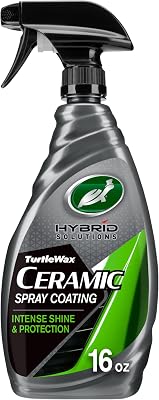
This is the product that makes waxing a thing people actually do rather than intend to do. Traditional wax fails on adoption, not performance — a paste that takes three hours gets applied once and then never again, and paint that is waxed twice a year beats paint that was waxed beautifully one time in 2023. Spray ceramic changes that maths: fifteen minutes after a wash, and the beading is genuinely impressive for the effort. Be realistic about the gloss ceiling. It does not produce the depth a good paste gives you on dark paint, and anyone claiming otherwise is selling something. What it produces is very good protection that you will actually maintain.
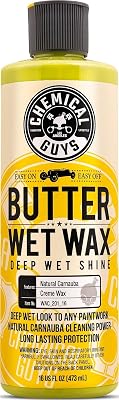
Butter Wet Wax is the compromise pick and it is a good one. You get most of the visual depth carnauba is prized for — that slightly liquid, reflective quality on dark paint that sealants never quite replicate — without the arm work and the removal fight of a paste. The trim-safe formulation deserves specific credit, because white wax residue dried into the texture of black plastic trim is the thing that turns a satisfying afternoon into an hour with a toothbrush. Durability is the honest trade: expect weeks to a couple of months rather than the season you would get from the ceramic spray. If you enjoy the process and want the look, this is the one.

Paste is for people who like doing this. That is not a dismissal — there is a real reason paste persists despite being outperformed on durability by cheaper, faster products, and it is what dark paint looks like afterwards. Formula 1's carnauba paste delivers that at a sane price with a review base large enough to trust. The rating is the lowest in this roundup at 4.5, and reading the complaints, most of them are about removal difficulty rather than the finish. That is a technique problem as much as a product one: applied thin, on cool dry paint, in shade, it comes off fine. Applied thick in the sun, any paste wax becomes a chore.
| Pick | Format | Application time | Typical durability | Owner rating | Link |
|---|---|---|---|---|---|
| Turtle Wax Best Overall |
Ceramic spray | 15-20 min | Several months | 4.6★ (29,200+) | Check Price |
| Chemical Guys Best Liquid |
Liquid carnauba | 30-45 min | Weeks to 2 months | 4.6★ (14,500+) | Check Price |
| Formula 1 Best Paste |
Carnauba paste | 60-90 min | Weeks to 2 months | 4.5★ (14,800+) | Check Price |
Carnauba wax is a natural product that gives warm depth and lasts weeks. A synthetic sealant is engineered for durability and lasts months, with a sharper, more reflective look. Ceramic coatings are a different category again — a semi-permanent layer measured in years, usually professionally applied. Most spray products marketed as ceramic wax, including our top pick, are hybrids leaning toward sealant durability. Buy for the behaviour you want, not the word on the bottle.
A wax advertising twelve months of protection is quoting ideal conditions. A car parked outside through a real summer, washed regularly and rained on, will see a fraction of that. Judge by beading: when water stops forming tight beads and starts sheeting flat across the panel, the protection is spent regardless of what the label promised. For most products that is a seasonal cycle, and reapplying is cheap.
Wax applied over bonded contamination locks the contamination in and looks worse than bare paint. The sequence is not optional: wash, decontaminate if the paint fails the plastic bag test, then protect. If the car has swirls, wax will mask them briefly and they will reappear — that is a polishing job, and polishing must happen before waxing, never after.
This applies to every format and it is where most bad experiences come from. A thick coat does not protect better, it just makes removal harder and increases the chance of streaking. Apply a thin even layer, let it haze to the manufacturer's timing, and buff with a clean microfiber. Work panel by panel rather than doing the whole car at once, and never apply to a hot surface — the product flashes off before you can level it.
For most people the honest answer is Turtle Wax Hybrid Solutions Ceramic Spray, because protection you reapply every few months beats protection you applied perfectly once. If you want the deep carnauba look without losing an afternoon, Chemical Guys Butter Wet Wax is the balanced choice and it will not stain your trim. If the process is the point and your paint is dark, Formula 1's carnauba paste still gives the deepest finish here — apply it thin, on cool paint, in shade. Whichever you pick, wash and decontaminate first; wax over contamination is wasted effort.
Wax rewards preparation more than product choice. Our guide to waxing a car covers panel temperature, how thin a coat should actually be, and when to buff it off.
Prices change constantly, so we do not list them. These links go straight to each product on Amazon.
Turtle Wax → Chemical Guys → Formula 1 →Every three to four months is a reasonable rhythm for a traditional wax on a car that lives outside, and twice a year is defensible for a garaged car. Rather than a calendar, watch the water: when it stops beading tightly and starts lying flat across the panel, protection has worn through. Ceramic-infused sprays stretch that interval considerably, which is much of their appeal.
For protection and durability, modern ceramic-infused sprays generally match or beat traditional carnauba paste, and they take a fraction of the time. For pure visual depth on dark paint, a good paste still has an edge that sprays have not fully closed. The practical point is adoption: the wax you will actually reapply protects your paint better than the one you admire and never open.
Only if the paint has swirls or oxidation. Polishing uses abrasives to level the clear coat and remove defects; wax adds a protective layer on top. Waxing over swirls hides them briefly and they return. If the paint is in good condition, wash, decontaminate and wax — polishing removes clear coat, so it is not something to do routinely.
You should not. Heat makes the product flash off before it can be levelled properly, which causes streaking and makes removal much harder. Work in shade or a garage, on panels cool to the touch. Early morning and evening are the practical windows in summer. If the panel is hot enough to be uncomfortable to rest your hand on, it is too hot to wax.
No. Wax fills and masks very fine surface marring temporarily, which can make light swirls less visible for a few washes, but it removes nothing. Scratches are grooves in the clear coat and require an abrasive polish or compound to level. If you can catch a fingernail in a scratch, it is through the clear coat and no polish will fully remove it.


Every product on this page was located and verified on Amazon at the time of writing — we confirm the exact listing, the star rating, the review count and stock status before a product goes in a roundup, and we never recommend a product we could not verify. Specifications come from the manufacturer listing, not from memory. We deliberately publish no prices, because they change faster than we can update pages. Ratings and review counts were accurate as of August 6, 2026.