

Fluids & Maintenance
The cabin air filter is the one that cleans the air coming through your vents — pollen, dust, soot, and with a carbon element, a good deal of the exhaust smell from the car in front. It is not the engine air filter, which is a different part doing a different job, and confusing the two is the most common mistake in this category. If your vents smell musty or the airflow has quietly weakened over a couple of years, this is almost certainly why.

It is also one of the easiest jobs on a car. On most vehicles the filter sits behind the glovebox, and reaching it is a matter of releasing a couple of clips — no tools, ten minutes, and the old filter usually comes out visibly grey with leaves in it. One thing before the picks: cabin filters are fitment-specific. Every product below is a range we rate, linked to one common application so you can see a real listing, and you must confirm the part number matches your year, make, model and trim.
Filtration media came first: a plain particulate filter handles pollen and dust, while an activated carbon layer additionally adsorbs odours and some gaseous pollutants, and for anyone who commutes in traffic that difference is noticeable rather than theoretical. Beyond media we weighted fitment breadth, since the best filter in the world is useless if the manufacturer does not make it for your car, and we checked that listings had a real part-number cross-reference rather than vague compatibility claims. We rejected listings under roughly 25 reviews. This is one of two filters on your car and they are frequently confused, so read it alongside our engine air filter guide; if the cabin smells bad, a thorough interior clean is the other half of the fix.
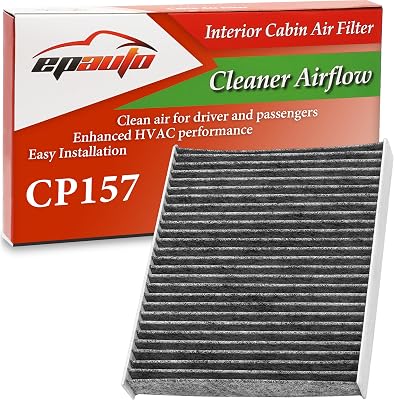
EPAuto has quietly become the default in replacement filters and it is easy to see why: the media is properly pleated with a sensible frame, the fitment cross-references are accurate, and the price is low enough that changing the filter on schedule stops feeling like a decision. A 4.8-star average across seven thousand ratings is unusually high for any automotive part, and reading the negative reviews, the overwhelming majority are people who ordered the wrong part number rather than complaints about the filter. Check your application carefully and this is a straightforward recommendation. It is a particulate filter rather than a carbon one, so if odour is your problem, look at our second pick.
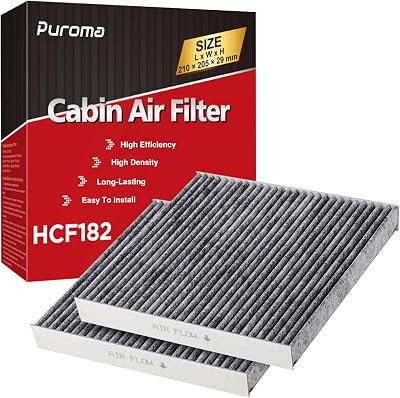
If your complaint is smell rather than airflow, buy carbon. A particulate filter physically strains out pollen and dust but does essentially nothing about odour molecules; activated carbon adsorbs them, and the difference sitting in traffic behind a diesel is immediate and obvious. Puroma sells these as a two-pack, which is the sensible way to buy a part you will replace again in a year or two, and it works out cheaper per filter than most single carbon filters. The trade against our top pick is a slightly lower rating and a narrower catalog, so check fitment first — but where it fits, carbon is the upgrade worth having.

K&N's argument is arithmetic: buy once, wash it every year, never buy another. If you keep cars for a long time that genuinely works out cheaper, and there is a reasonable environmental case for not sending a filter to landfill annually. Two honest caveats. First, washing a filter is more effort than throwing one away, and a filter you keep meaning to clean is worse than a cheap one you actually replace. Second, it must be bone dry before it goes back in — a damp filter in a dark housing is exactly how you create the musty smell you were trying to eliminate. If you are disciplined, this is the best long-run value here.
| Pick | Media | Handles odours | Reusable | Owner rating | Link |
|---|---|---|---|---|---|
| EPAuto Best Overall |
Pleated particulate | No | No | 4.8★ (7,000+) | Check Price |
| Puroma Best Value |
Activated carbon | Yes | No | 4.7★ (4,000+) | Check Price |
| K&N Best Reusable |
Washable synthetic | Partially | Yes | 4.7★ (4,290+) | Check Price |
The two get confused constantly and they are entirely different parts. The cabin filter cleans air entering the passenger compartment through the vents, and it exists for your lungs. The engine air filter cleans air entering the intake, and it exists for the engine. They sit in different places, have different part numbers, and neither substitutes for the other. Most cars have both, and both need replacing — our engine air filter guide covers the other one.
A standard pleated filter traps pollen, dust, soot and debris, which covers airflow and allergies. An activated carbon filter does all that and additionally adsorbs odour molecules and some gaseous pollutants. If your issue is weak airflow or hay fever, particulate is fine and usually rates higher. If your issue is exhaust fumes or a persistent smell in traffic, buy carbon — it is the only one of the two that addresses it.
There is no universal cabin air filter. Sizes and frame shapes vary by manufacturer, model and often trim, and a filter a few millimetres out will not seat, which lets unfiltered air bypass it entirely. Run your year, make, model and trim through the seller's fitment tool, and if you have any doubt, pull the old filter first and read the part number printed on its frame. It takes five minutes and removes the guesswork.
Most manufacturers specify somewhere between 15,000 and 30,000 miles, or annually. Drive on dusty roads, park under trees, or sit in heavy traffic and it will be sooner. The symptoms are unmistakable once you know them: reduced airflow at full fan, a musty smell when the air conditioning starts, and fogging that takes longer to clear. If you have never changed yours and the car is more than a couple of years old, it is almost certainly overdue.
For most cars the EPAuto CP157 is the buy — 4.8 stars across seven thousand owners, wide fitment coverage and cheap enough to change on schedule. If exhaust smell in traffic is the thing bothering you, the Puroma activated carbon two-pack is the one that actually addresses odour, which a particulate filter cannot. If you keep your cars a long time and will genuinely wash it, the K&N LIFETIME filter is bought once. Confirm your part number before ordering any of them — that is where the money gets wasted here.
The cabin filter and the engine air filter are different parts doing unrelated jobs, and they are commonly confused. Our guide to replacing an engine air filter explains which is which and where each one lives.
Prices change constantly, so we do not list them. These links go straight to each product on Amazon.
EPAuto → Puroma → K&N →It filters the air entering the passenger compartment through the heating and air conditioning vents, trapping pollen, dust, soot and road debris before you breathe it. Filters with an activated carbon layer additionally adsorb odours and some gaseous pollutants. It has no effect on engine performance — that is the engine air filter, a separate part.
Typically every 15,000 to 30,000 miles or once a year, whichever comes first, and sooner in dusty conditions or heavy traffic. Rather than tracking mileage, watch for the symptoms: weaker airflow at the same fan speed, a musty smell when the air conditioning starts, and windows that take longer to demist.
They filter different air for different reasons. The cabin filter cleans air going into the passenger compartment and protects the people in the car. The engine air filter cleans air going into the engine's intake and protects the engine. Different locations, different part numbers, and both need replacing on their own schedules.
Only if it is designed to be washed, like our K&N pick. A standard pleated paper filter cannot be cleaned meaningfully — vacuuming it removes loose surface debris and leaves the embedded particles that are actually restricting airflow, and washing it destroys the media. Replace disposable filters; wash only the ones sold as reusable, and make sure they are completely dry before refitting.
On most cars it is one of the easiest jobs there is — the filter sits behind the glovebox, which usually releases with a couple of clips or stops, and no tools are needed. Ten to fifteen minutes is typical. Note the airflow direction arrow on the old filter and fit the new one the same way round, and a video for your specific model will show you the glovebox release.


Every product on this page was located and verified on Amazon at the time of writing — we confirm the exact listing, the star rating, the review count and stock status before a product goes in a roundup, and we never recommend a product we could not verify. Specifications come from the manufacturer listing, not from memory. We deliberately publish no prices, because they change faster than we can update pages. Ratings and review counts were accurate as of August 10, 2026.